Give the Estate an Identity Before It Reaches a Portal
An ultra-luxury residence deserves to enter the market as a sovereign heritage brand: a property with documented authorship, a distinct identity, and carefully governed access. Its valuation argument begins with what makes it irreplaceable—before public exposure turns it into another address beside a price.
That distinction matters for celebrity estates and architectural residences alike. A celebrated owner attracts attention; architect records, landscape drawings, and material invoices give buyer representatives something substantive to examine. Publishing photographs before those materials are assembled leaves the imagery carrying the entire proposition.
The launch sequence below serves trophy transactions conducted through advisors and a principal buyer. Each asset earns its place against three criteria: verifiable provenance, emotional relevance to the likely buyer, and usefulness in qualifying engagement before a showing. Public syndication follows that preparation.
The practical gate is straightforward: complete the monograph, spatial plans, and credentialed document file before opening the residence to private viewings.
Establish the Estate’s Story, Name, and Visual Language
Identity comes before image. Establish architectural authorship first, settle the estate name next, then give photography a precise editorial brief. This order keeps later materials recognizably attached to the same property.
1. Architectural Provenance Monograph
Build the monograph from architect records, landscape drawings, and material invoices. Identify who designed the residence, who shaped its grounds, and where its defining materials originated. Separate documented lineage from descriptive copy so the reader can follow the evidence.
The result should read like a considered architectural publication, with captions and sourcing that support its account of the estate.
2. Estate Name and Bespoke Monogram
Choose a name that gives the property a consistent editorial identity beyond its municipal address. Resolve the typography and monogram early enough to appear in the monograph’s colophon, film titles, and private presentation materials.
Keep the legal address clear in transaction documentation. The estate name supplies continuity across property marketing assets.
3. Acquisition Profiles for Likely Buyers
Define buyer profiles through acquisition requirements. An art collector may examine display walls and environmental controls; an equestrian buyer may prioritize the grounds; a family office may scrutinize guest accommodation and staff circulation.
Use these profiles to decide which evidence appears first in a presentation. Qualification should address financial capacity and property requirements, with access decisions applied consistently.
4. Architectural Still-Photography Library
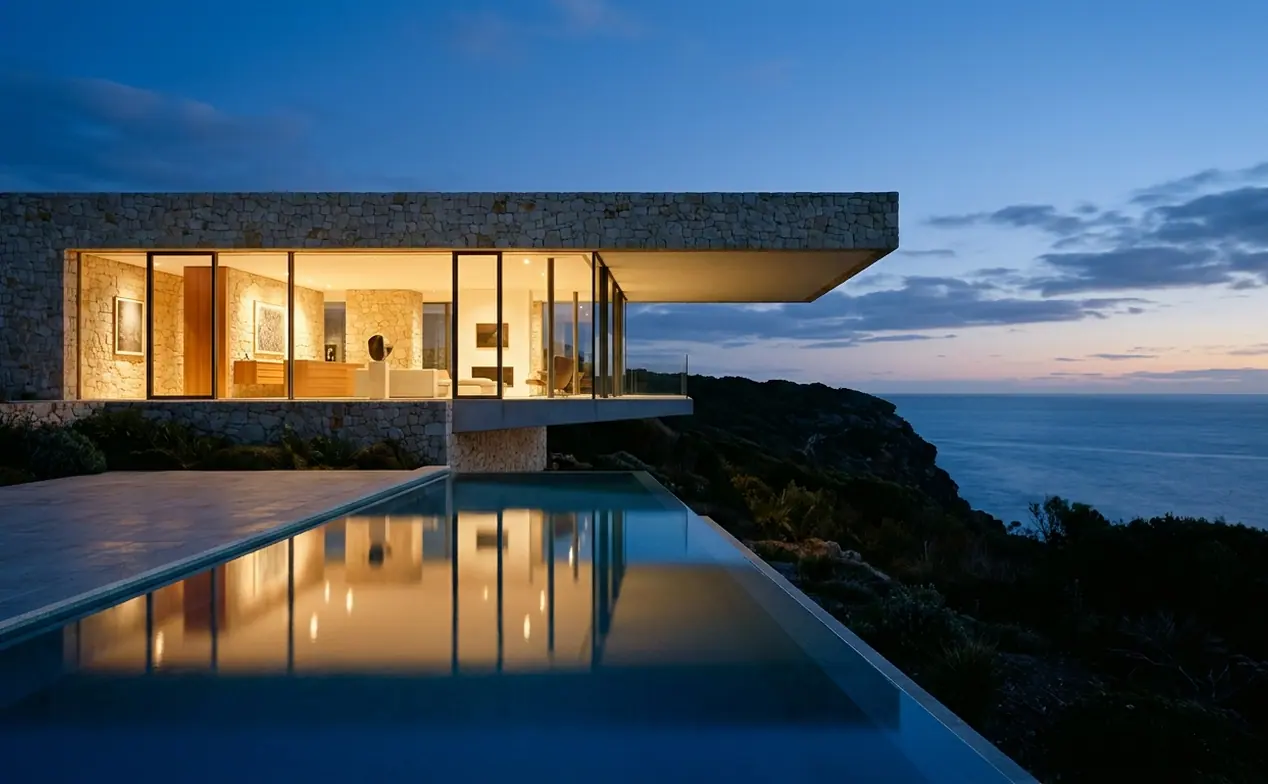
Commission daylight, golden-hour, and blue-hour photography as a coordinated library. Give each lighting condition a purpose: daylight for material legibility, low sun for landscape relationships, and twilight for the transition between interiors and grounds.
A common launch error is letting finished photographs trigger publication while documentation remains unfinished. Prevent it with a release checklist that ties image distribution to completed provenance and plans.

Make the Architecture Legible to the Buyer’s Inspection Team
Required property disclosures belong in the transaction documentation. Organize the technical package so counsel and inspection teams can locate the relevant information, then reconcile presentation drawings and finish descriptions with that file before release. Elegant formatting should make examination easier.
5. Floor Plans and Site Topology Package
Issue layered architectural CAD covering the primary residence, guest pavilions, staff circulation, and security perimeters. Show sightlines and the relationship between buildings, rather than relying on furnished room diagrams alone.
Guest and staff routes deserve particular attention. Their separation explains how the estate functions during a private dinner or an extended family stay.
6. Architectural Cinema
Structure the film around movement through the property and the progression of natural light from morning to dusk. Color grading should preserve the relationship between the film, still photographs, and physical finishes.
Let location sound carry the experience of acoustic quiet. A continuous passage from a reception room into the garden can explain spatial flow more clearly than a succession of disconnected aerial views.
7. Materiality and Systems Dossier
Catalog stone origins, bespoke millwork, smart-home integration, and environmental controls. Assemble quarry certificates, shop drawings, and system schematics alongside the relevant descriptions.
This is where luxury amenities become inspectable. The buyer’s technical team should be able to move from a photographed finish to its supporting documentation without reconstructing the connection.
8. Conveying-Art Schedule
Create a separate schedule identifying which displayed artworks convey with the residence. Keep its descriptions consistent with the monograph, photography, and private presentation.
Resolve this distinction before circulation. Art can define a room’s visual identity; the acquisition file needs equal precision about what the buyer receives.
Control Who Receives the Estate File and When
A trophy launch addresses a narrow audience of principals and their representatives. The strategic response is a deliberate distribution sequence: credentialed review, private consultation, then controlled editorial exposure. The intended outcome is informed engagement before a showing, with each recipient receiving the appropriate material.
9. Encrypted Private Microsite
Place the complete documentation in an encrypted, password-protected microsite with individually issued credentials and public search indexing blocked. Give wealth advisors and buyer representatives access before private presentation consultations begin.
Treat access control and search visibility as separate implementation tasks. Review the document set before issuing credentials.
10. Numbered Linen-Bound Presentation
Produce a numbered linen-bound volume for vetted principals attending private consultations. Carry the established estate name, monogram, photography, and architectural narrative into a tactile edition.
Its distribution should remain as deliberate as its binding. Assign each copy to a consultation rather than leaving volumes in general circulation.
11. Embargoed Architectural Press Kit
Prepare an exclusive briefing for architectural and financial journalists, with agreed publication timing ahead of wider private outreach. Supply verified authorship, approved imagery, and a coherent account of the residence’s distinguishing features.
The press feature introduces the estate. The principal receives something more specific: a numbered linen volume and an individual credential to the architectural file.