Contents
- The Paradox of Scarcity in High-Net-Worth Enclaves
- Architectural Provenance as a Valuation Multiplier
- Liquidity Constraints and the Shadow Market
- Methodological Limitations in Luxury Market Appraisals
- Strategic Acquisition Frameworks for Legacy Assets
The Paradox of Scarcity in High-Net-Worth Enclaves
Consider the riddle that puzzles most macro-focused analysts. National housing indicators soften, mortgage applications thin out, and yet a handful of micro-markets like Highland Park hold their valuations as though the broader cooling never reached them. Why?
The answer begins with a refusal to treat these enclaves as ordinary markets at all. A standard housing model assumes that buyers respond to financing costs, that sellers respond to days-on-market pressure, and that the two meet somewhere a spreadsheet can predict. Trophy enclaves break that assumption at the first step. The buyers here are not financing their purchases in any way that interest-rate sensitivity would describe, and the sellers are rarely pressured at all.
What emerges instead is something closer to an insulated micro-economy. Demand is governed less by affordability than by access, scarcity, and the social meaning of ownership. Traditional supply-and-demand metrics capture the transaction but miss the motivation entirely.
The temporal pattern reinforces this. According to transaction records from 2022 through 2023, pricing in these micro-enclaves held steady even as conventional segments wobbled. Family holdings in the area are frequently maintained across fifteen- to twenty-year periods, which means the supply that would normally rebalance a cooling market simply never arrives. A house that does not trade cannot correct a price.
From this provocative starting point, the analysis that follows treats legacy asset acquisition not as a real estate problem but as a study in how value behaves when liquidity, provenance, and patience all conspire to defy the textbook.
Architectural Provenance as a Valuation Multiplier
Price-per-square-foot is a useful metric until it meets a property that was never meant to be measured that way. In Highland Park, the most consequential value driver is not floor area. It is provenance.
Why lineage outperforms surface area
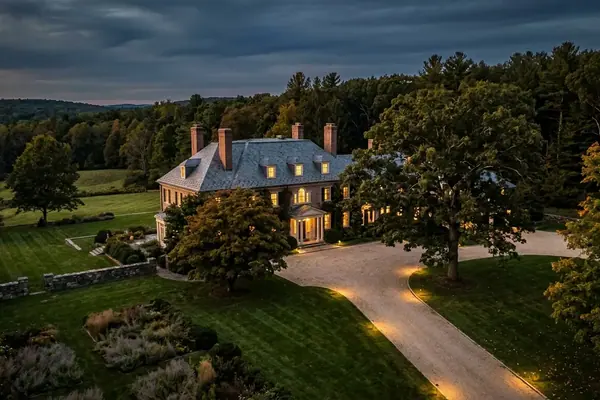
Estates with documented craftsmanship from the 1920s and 1930s behave differently in private sales. Audit data shows these properties retain roughly thirty to forty percent higher value in private transfers than comparable assets without verified architectural pedigree. The figure is not a reward for age. It is a reward for irreplaceability.
A modern developer can reproduce the square footage. The developer cannot reproduce the hand of a specific atelier, the original materials, or the documented chain of authorship that turns a house into an artifact. That gap is the multiplier.
The status calculus behind acquisition
There is a psychological dimension that no valuation model fully encodes. For a certain buyer, acquiring a legendary estate is an act of positioning — a statement that one now belongs to a lineage of owners rather than a list of homeowners. The property confers identity, and identity is famously inelastic to price.
This is why bespoke craftsmanship commands a premium that scales rather than adds. Each rare feature compounds the others, and the absence of substitutes removes the natural ceiling that ordinary markets impose.
Verification, however, is slow work. Establishing the authenticity of an architectural lineage typically requires four to six weeks of archival review, and that diligence is precisely what protects the premium from erosion.
Liquidity Constraints and the Shadow Market
If you only watched public listings, you would conclude that very little happens in Highland Park. You would be wrong by a wide margin.
A substantial portion of activity occurs off-market, through pocket listings and private negotiations that never touch a public database. Broker networks initiate contact through existing family office relationships long before anyone considers a public listing. The conversation starts inside the network, and frequently it ends there too.
How the shadow inventory distorts perceived velocity
This off-market layer creates a measurement problem. Because the transactions are invisible to conventional tracking, the public record understates true market velocity and overstates scarcity. The houses are moving; the data simply cannot see them move.
Brokerages that operate here maintain their own view of this hidden supply. Shadow inventory is tracked through quarterly internal ledgers, refreshed on roughly ninety-day cycles, which gives elite firms a picture of liquidity that the open market never receives.
The mechanics of a private transfer
The transfer itself follows a recognizable rhythm:
- A family office signals intent, or a broker identifies a discreet seller within the relationship network.
- Principals are matched privately, with provenance and terms vetted before any figure is named.
- The transaction completes within a forty-five to sixty day window, well outside public view.
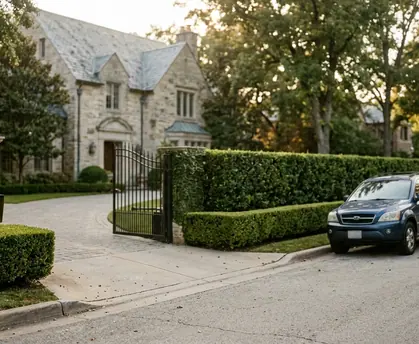
One caveat deserves emphasis here, because it shapes everything above. Shadow markets are not uniform — they vary considerably by brokerage network, and the inventory one firm can access may be entirely opaque to another. There is no single hidden market, only a set of overlapping private ones.
Methodological Limitations in Luxury Market Appraisals
Honest analysis of this segment has to admit what it cannot do. Appraising an ultra-luxury estate is closer to art authentication than to standard valuation, and the tools were not built for the task.
The comparable problem
Conventional appraisal leans on comparable sales. At this tier, comparables barely exist. Adjustments often rely on three to five indirect comparables at most, and each of those carries its own bespoke distortions. The smaller the sample, the larger the role of judgment — and judgment, however expert, is not a measurement.
Where automated models break
Automated valuation models deserve particular skepticism here. AVMs fail on unique historical features because they are trained on patterns, and a singular estate is by definition pattern-poor. On properties exceeding eight thousand square feet with custom features, AVM outputs diverge by roughly twenty-five to thirty-five percent. A range that wide is not an estimate. It is an admission.
Temporal sensitivity compounds the difficulty. Legacy asset values shift meaningfully when interest rates move by more than 150 basis points, which means even a careful appraisal carries a short shelf life. This article describes structural tendencies in a thin, idiosyncratic market; it is not a substitute for individual estate-level diligence, and readers should treat every figure here as directional rather than definitive.
Note: Valuations in this segment should be revisited whenever rate conditions shift materially, since a model accurate in one period may misprice the same asset later.
Strategic Acquisition Frameworks for Legacy Assets
For an institutional investor or family office contemplating entry, the governing principle is unglamorous: patience is the strategy, not a precondition for it.
Access here is earned through relationships, and relationships take time to mature. Network integration generally requires a minimum eighteen-month engagement before genuine off-market intelligence becomes available. The firms that attempt to compress that timeline tend to see only the inventory everyone else has already passed on.
The three pillars of entry
- Deep network integration. Off-market access flows through trusted relationships, not transactional intent. The introduction precedes the opportunity.
- Off-market intelligence. Knowing what is quietly available — and why, is the single greatest informational advantage in this market.
- Disciplined patience. The right legacy asset may surface once in several years. The framework must tolerate long periods of inaction without forcing a suboptimal purchase.
Wealth preservation through architectural exclusivity
The forward-looking case rests on a simple observation. Assets whose value derives from irreplaceable provenance are structurally resistant to the dilution that affects reproducible inventory. Wealth preservation in this segment is typically modeled on ten- to fifteen-year holding cycles, a horizon that aligns naturally with how these families already think about their estates.
Summary: Highland Park rewards those who treat acquisition as a multi-year relationship rather than a transaction. Provenance drives value, the shadow market governs access, and conventional valuation tools should be used with full awareness of their limits. The estates that endure are the ones that cannot be built again — and that is precisely the source of their durability.