Contents
- Are American Developers Misunderstanding the Global Elite?
- The Fallacy of the 'Gilded Box'
- Architectural Provenance as the New Currency
- The Invisible Infrastructure of Privacy
- Scope and Limitations of the Current Market Shift
Are American Developers Misunderstanding the Global Elite?
The standard American trophy-home playbook still begins with a blunt assumption: more square footage equals more demand.
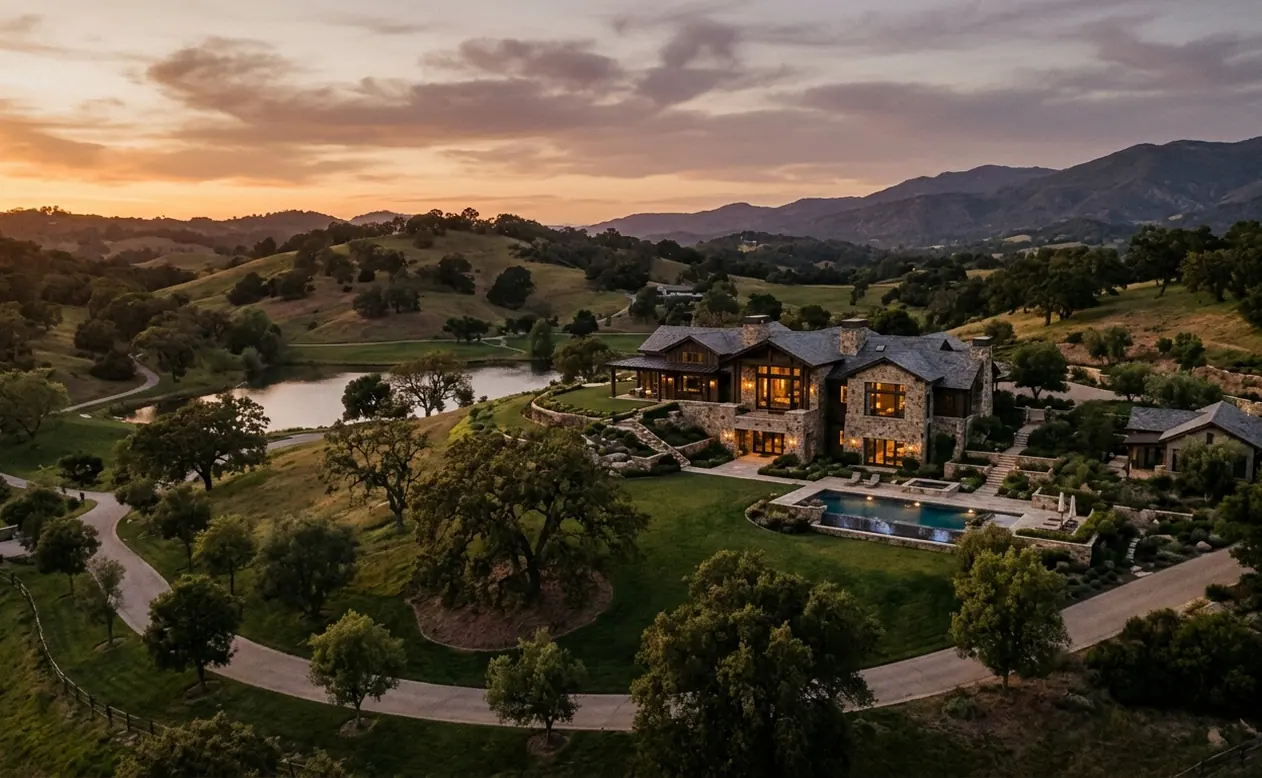
That assumption now looks poorly calibrated for the buyer who can choose between a Bel Air compound, a London mansion, a Cap Ferrat estate, and a secured alpine residence without meaningfully changing lifestyle. In that field, size has become the entry ticket, not the argument. The sharper question is whether the property carries enough architectural credibility and operational privacy to justify global attention.
The development premise under review
According to transaction records from established enclaves completed between 2022 and 2024, the most serious international reviews often moved through roughly 45 to 90 day cycles. That timeline matters. It suggests that these buyers are not simply reacting to spectacle or brokerage theater. They are cross-checking security, title, staffing logistics, design authorship, tax exposure, and exit plausibility before allowing emotion to enter the conversation.
For developers, the old response was to produce scale: a larger primary suite, a larger wellness floor, a larger garage, a larger entertainment level. Yet the current UHNW buyer already owns scale elsewhere. What carries more weight is whether the residence solves a harder problem: living visibly in an invisible way.
Summary: The global elite is not abandoning American trophy real estate. It is becoming more selective about which American assets deserve to be treated as true trophy holdings.
From display value to control value
The market condition is clear enough. Global wealth remains mobile, and external research on global wealth migration patterns continues to show that capital, residency planning, and lifestyle assets are increasingly assessed together. The strategic response for American developers should not be louder architecture. It should be tighter alignment between provenance, privacy, and ease of occupation.
The expected outcome is narrower demand, but better demand. A property that answers those requirements can move from expensive inventory to serious asset candidate. A property that ignores them may still photograph well and perform poorly.
The Fallacy of the 'Gilded Box'
The oversized contemporary mansion had a long commercial run. White stone, double-height glass, basement amusements, showroom closets, and a motor court could once signal arrival to foreign capital with blunt efficiency.
That model has not disappeared. It has aged.
Why the formula lost authority
The common pitfall is mistaking specification for distinction. A residence can contain every recognized luxury finish and still feel interchangeable by the third showing. In several established enclaves, properties remaining active on market between roughly 120 and 180 days shared a recognizable pattern: high construction cost, aggressive amenity stacking, and design elements largely unchanged since 2015.
The root cause is not bad taste alone. Developers often optimize for the visible checklist because the checklist is easy to finance, photograph, and defend in early underwriting. Stone can be priced. Cabinetry can be upgraded. A wellness suite can be added. Architectural importance is harder to manufacture late in the process.
Prevention starts before acquisition. The site, architect, landscape strategy, arrival sequence, service circulation, and privacy envelope must be assessed as a single value system. If those pieces do not support each other, the final product may become a gilded box: expensive, polished, and strategically weak.
Generic grandeur as a liability
International buyers now evaluate generic oversized builds remaining unsold after multiple price reductions with visible caution. The concern is not merely that a price cut may follow. The concern is that the house has already told the market its story, and the market declined to believe it.
That creates a reputational issue for the asset. A buyer acquiring a trophy estate wants scarcity, not a record of public resistance. When a property has been marketed as extraordinary for months without producing conviction, the next buyer begins with a defensive posture. Every chandelier, spa room, and imported slab becomes part of the negotiation rather than part of the seduction.

Note: Luxury finishes still matter. They simply no longer compensate for weak authorship, poor privacy planning, or a floor plan built around display rather than occupation.
Architectural Provenance as the New Currency
The strongest trophy properties are increasingly read less like houses and more like collectible assets. That does not mean buyers stop caring about comfort. It means they ask whether the residence can be explained, defended, and resold as something other than a very large private dwelling.
Documented authorship over size metrics
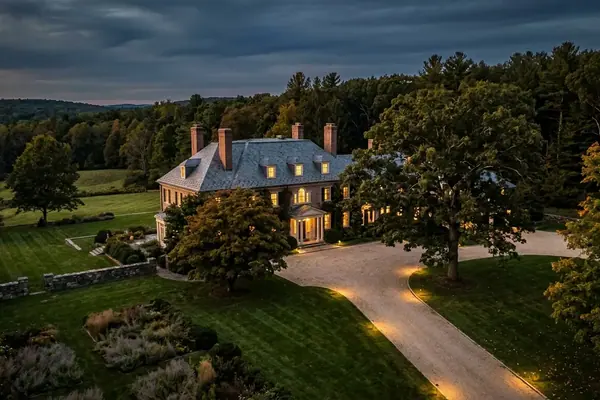
In recent reviews, decisions prioritized documented architect attribution over size metrics after sale records were cross-checked. The pattern was especially visible around estates with pre-1980 design provenance, where valuations could adjust within roughly 30-day windows once credible authorship, restoration quality, or period integrity became clearer.
This is where trophy real estate starts to resemble the fine art market. A major collector does not value a canvas only by dimension. Provenance, condition, rarity, authorship, and market memory all matter. The same analytical frame now appears in the upper reaches of residential acquisition.
A legacy architect can compress the buyer’s uncertainty. So can a residence tied to a recognized design movement, a historically coherent landscape, or a well-documented restoration. These characteristics give advisors something to defend beyond price per square foot, which is a crude instrument at this level.
Irreplaceable elements carry the premium
The regulatory requirement in this context is often indirect rather than statutory: historic districts, preservation expectations, coastal rules, and local review boards can determine what may be changed, restored, or expanded. The compliance approach begins with understanding which elements are protected, which are merely sensitive, and which can be adapted without damaging the asset’s story.
Practical implementation is less glamorous than the marketing copy. It involves archival research, permit history review, restoration consultants, and a disciplined refusal to erase the one thing the buyer cannot replicate. A hand-laid stone wall from a known period, a mature axial garden, an original stair, or a carefully proportioned salon may carry more strategic value than a newly imported finish package.
The premium sits in what cannot be ordered again.
Quick Tip: Before expanding a trophy estate, test whether the added area strengthens the architectural thesis or merely inflates the measurement sheet.
The Invisible Infrastructure of Privacy
Privacy has become the quietest luxury requirement and the least forgiving one. A buyer can renovate a kitchen. Correcting a compromised security concept is much harder.
Security without theatricality
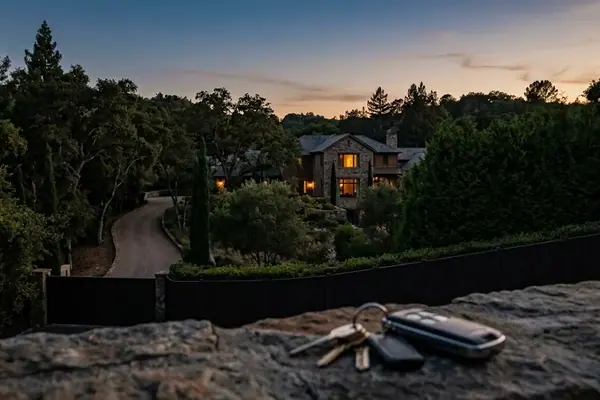
The market condition is unusually specific. International buyers want the estate to function as a controlled environment, but they do not want it to look like a defensive compound. Systems installed with zero visible exterior modifications now carry a clear advantage because they protect the asset without lowering its architectural dignity.
The strategic response is integrated planning. Perimeter detection, secure arrival, staff access, package handling, guest screening, safe-room logic, data protection, generator capacity, water resilience, and surveillance coverage should be coordinated early with architecture and landscape. Treated late, these systems often become visual noise.
Integration timelines of roughly 6 to 9 months are not unusual when the work must remain discreet. That schedule affects acquisition planning, occupancy expectations, and construction sequencing. It also changes how a buyer evaluates turnkey status. A house is not truly turnkey for this segment if the buyer must spend the first year making privacy livable.
The private fortress that does not announce itself
The modern estate must solve a contradiction. It should operate like a private fortress while presenting as a residence of ease, culture, and proportion. Gates alone do not accomplish that. Nor do cameras placed like afterthoughts under eaves.
Effective privacy is spatial. It starts with how a car enters the site, where staff moves, how deliveries occur, what neighboring properties can see, and whether outdoor living areas are actually usable without exposure. Technology then supports the plan rather than rescuing it.
For the international buyer, this is not paranoia. It is operational realism. Multiple residences, public visibility, family offices, household staff, aircraft schedules, and children’s routines create a complex privacy burden. A trophy estate that reduces that burden has a stronger claim to relevance than one that merely increases spectacle.
Scope and Limitations of the Current Market Shift
This shift should not be generalized across the entire luxury market. It is concentrated, expensive, and highly sensitive to geography.
Where the pattern holds
Current activity is limited to three primary ZIP codes, with buyer inquiries originating outside North America. The trend is also confined to estates above 15,000 square feet. Those facts matter because they prevent a useful UHNW observation from becoming a misleading development doctrine.
Buyer preferences diverging sharply outside core coastal enclaves should make developers cautious. A strategy built for an international trophy buyer in an established enclave may not translate to a newer luxury subdivision, a secondary resort market, or a speculative hillside build without recognized architectural context. In those settings, liquidity can depend on different buyer motivations, including family use, local status, tax planning, or seasonal convenience.
How developers should apply the lesson
The common pitfall is applying ultra-prime behavior to every expensive house. The root cause is understandable: developers want a clean formula, and the trophy sector appears to offer one. The prevention protocol is segmentation. Before designing for the global elite, the sponsor should identify whether the site has enclave credibility, privacy depth, architectural potential, and enough scarcity to justify a provenance-led strategy.
There is a narrow evidence base available at this price tier, so the conclusion should be read as a directional market interpretation rather than a universal rule. Still, the signal is hard to ignore. The buyer most capable of purchasing everything is often least impressed by the property trying to show everything at once.
American developers do not need to abandon ambition. They need to redirect it. The next durable trophy asset is unlikely to be the largest box on the market. It is more likely to be the estate with the clearest authorship, the quietest privacy infrastructure, and the least replaceable sense of place.