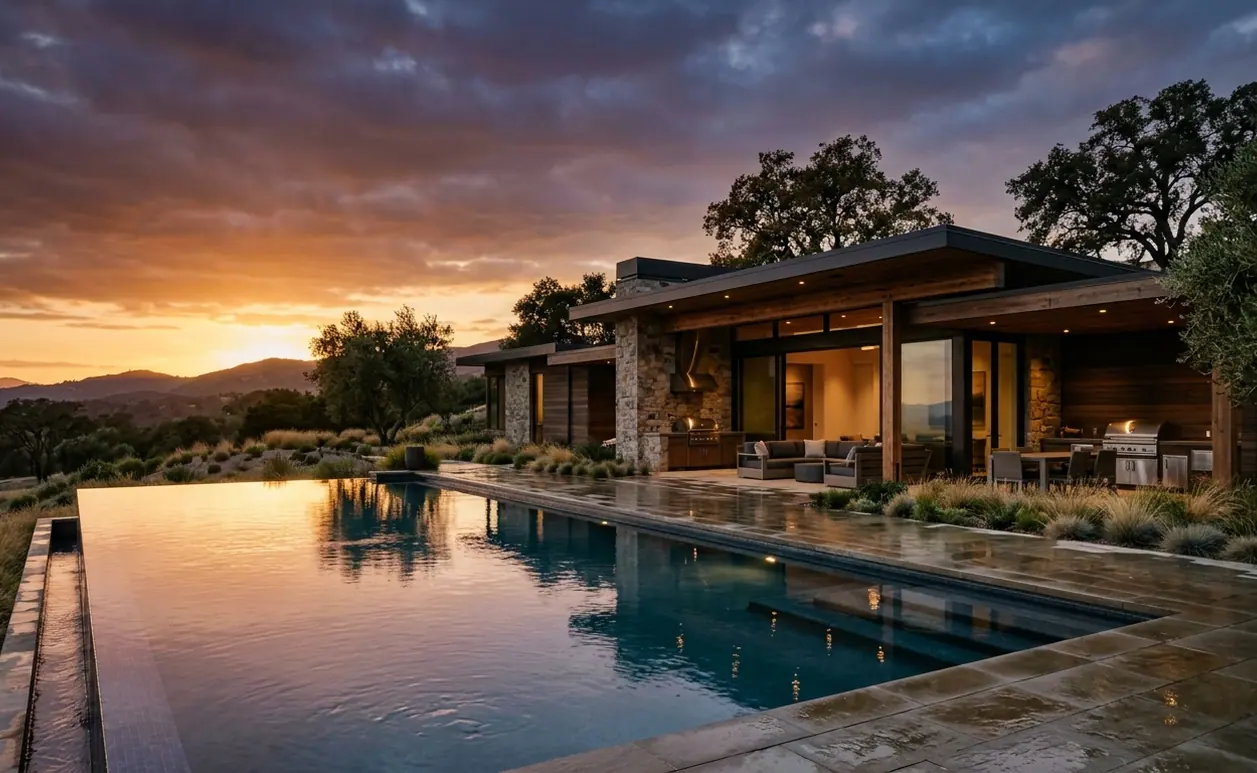
Beyond the Water's Edge: Rethinking Aquatic Luxury
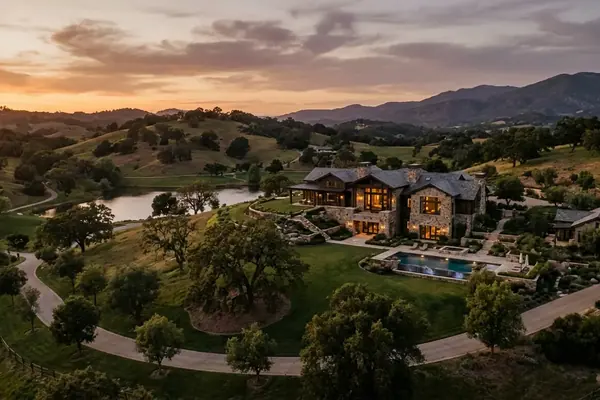
The traditional swimming pool has long functioned as a standalone outdoor amenity, visually and spatially detached from the primary residence. Current market conditions dictate a strategic response where the pavilion supersedes the main house as the focal point of estate planning. This paradigm shift establishes a deliberate tension between conventional leisure spaces and modern holistic wellness demands.
Architects are no longer designing mere outbuildings. They are engineering complete aquatic ecosystems. The expected outcome of this strategic realignment is a unified architectural narrative where water acts as the central organizing principle of the estate.
Note: The integration of these structures requires a fundamental reassessment of lot utilization and landscape topography.
From Cabana to Centerpiece: A Historical Trajectory
Historically, pool houses served as utilitarian changing rooms. They offered basic shelter and storage, entirely subordinate to the main residence. The trajectory toward sophisticated living quarters required significant advancements in structural engineering and material science.
Advanced glazing systems now dissolve indoor-outdoor boundaries. Massive, thermally broken sliding glass doors allow pavilions to open entirely to the elements during temperate months while maintaining rigorous climate control during inclement weather. Ultra-high-net-worth buyers demand year-round, climate-controlled aquatic environments.
The Shift in Spatial Hierarchy
This evolution reflects a broader change in how elite properties are inhabited. The pavilion has absorbed functions previously reserved for the primary residence, including formal dining, media consumption, and guest accommodation.
Engineering the Private Sanctuary: Wellness Infrastructure
A common pitfall in aquatic architecture is the acoustic and vibrational interference of commercial-grade pumps within serene spaces. The root cause is typically the superficial integration of mechanical systems as an afterthought. The prevention protocol requires rigorous spatial sequencing and subterranean isolation.
In our practice, decisions on hydrotherapy circuit placement followed from mapping mechanical vault volumes first against existing pool filtration lines, then confirming ceiling heights for chromotherapy arrays before finalizing the spatial envelope. Site records show subterranean vaults excavated to roughly 4 meters below grade to accommodate these complex systems.
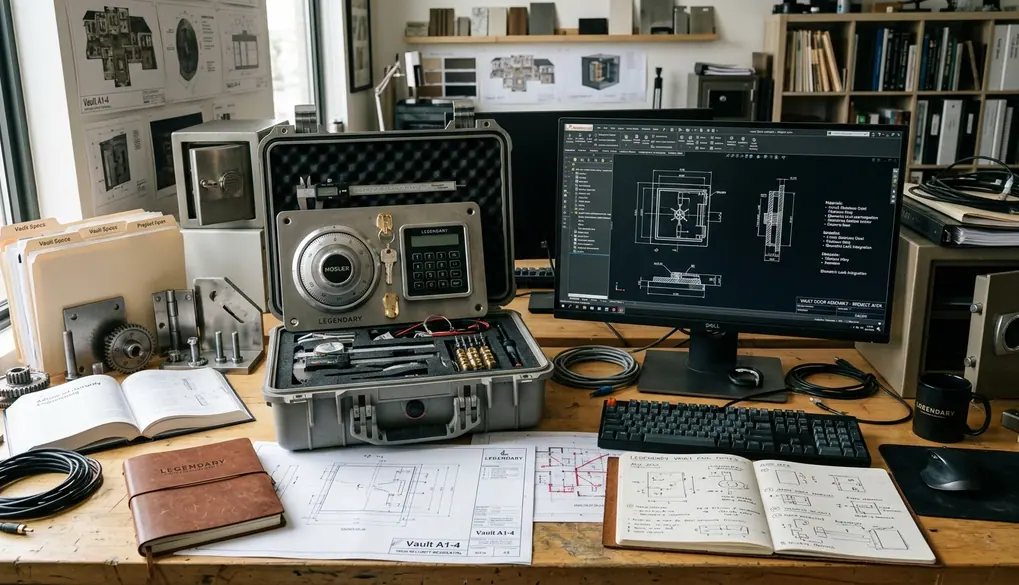
The theoretical framework prioritizes physiological recovery over mere recreation. Cold plunge circuits are maintained between 8 and 12 degrees Celsius across nine-month operating windows. These parameters demand commercial-grade infrastructure scaled for residential application.
- Dedicated massage and somatic therapy rooms.
- Dry saunas with precise humidity controls.
- Subterranean mechanical vaults for acoustic isolation.
Materiality and Biophilic Symbiosis in Pavilion Design
Material selection dictates the pavilion's performance as an environmental filter. Hyper-local, sustainable luxury materials establish a biophilic symbiosis with the surrounding landscape. Book-matched stone and thermally modified timber are selected not merely for aesthetics, but for their thermal mass and durability in high-humidity environments.
These structures utilize passive cooling and natural light to regulate internal climates. Deep overhangs calculate solar gain, while strategically placed clerestory windows facilitate cross-ventilation. The psychological impact of biophilic design principles in high-end aquatic architecture reinforces the restorative function of the space.
Quick Tip: Specify materials with low porosity for all surfaces adjacent to hydrotherapy circuits to mitigate long-term moisture degradation.
Structural Limitations and Zoning Parameters
Strict zoning regulations and lot coverage limits constrain pavilion expansion in prime luxury markets. Compliance requires rigorous site analysis and often necessitates building downward rather than outward. The practical implementation of subterranean wellness centers introduces profound geotechnical challenges.
Geotechnical borings are required prior to any vault excavation near water tables. While these architectural frameworks optimize spatial utility, standard models omit variable soil permeability rates in coastal estates. This necessitates site-specific geotechnical adaptations to prevent hydrostatic pressure failures.
The realistic scope of maintenance and energy consumption associated with commercial-grade residential facilities demands solid infrastructure planning and adherence to architectural design standards for aquatic environments.
The Future Trajectory of Aquatic Architecture
The next iteration of pavilion design focuses on autonomous climate management and AI-driven water purification. Ongoing multi-year research collaborations with structural engineering firms indicate a shift toward predictive environmental controls. However, predictive modeling faces logistical constraints; AI outputs diverge when local permitting cycles extend beyond roughly a year.
The transition of the pool pavilion—once a mere accessory structure, to the definitive anchor of the estate is complete. These structures redefine the legacy and valuation of luxury properties.
Summary: Aquatic architecture has evolved from utilitarian outbuildings to highly engineered wellness sanctuaries, requiring complex subterranean infrastructure and rigorous adherence to geotechnical parameters.