The Intangible Asset: Walking the Grounds of Legacy
Where Measurement Meets Memory
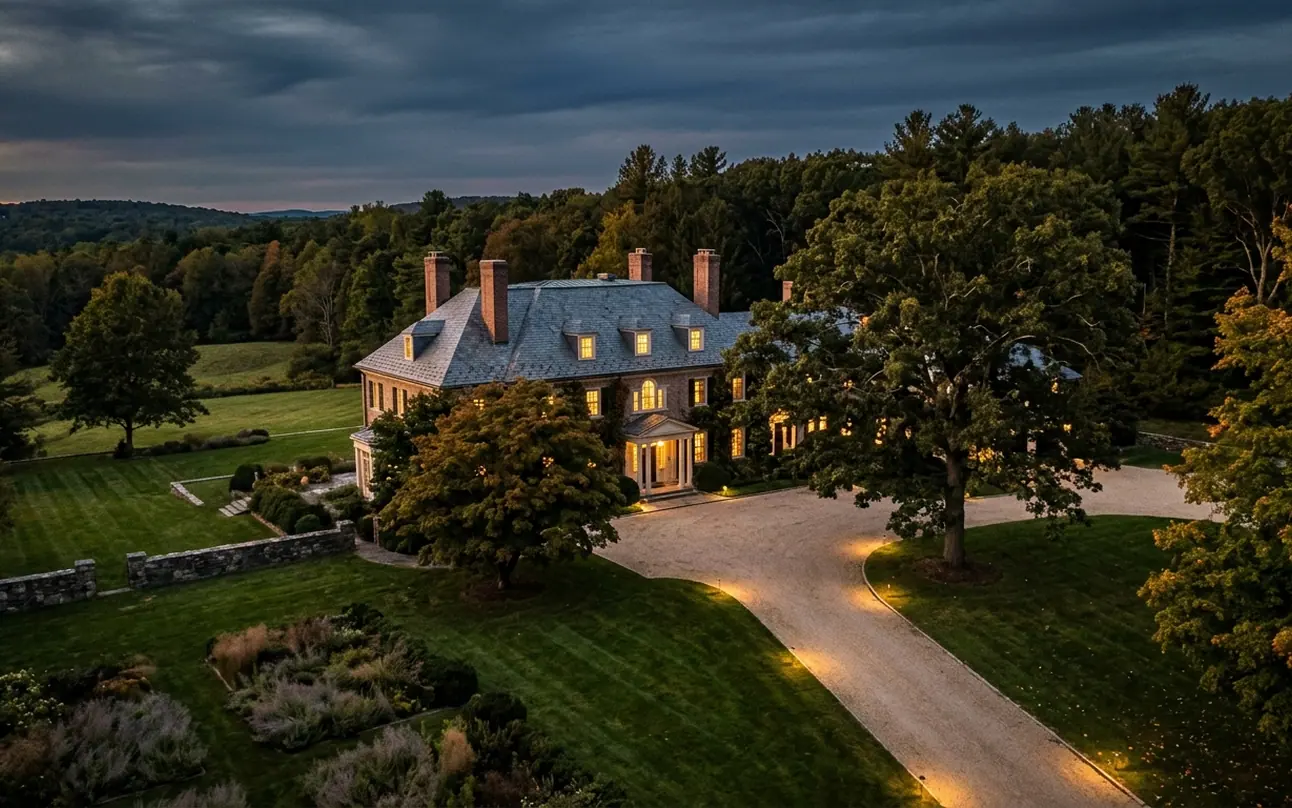
The Hollywood Hills ridge estate first presented itself through limestone, grade, and proportion. During a single 95-minute circuit between 7:40 a.m. and 9:15 a.m., the advisor catalogued cladding thickness, terrace setbacks, and the driveway’s ascent under clear late-spring light. The primary residence retained the massing associated with 1920s and 1930s construction, while mortar joints made the later wing additions legible.
Those details established the physical record. They could be measured, compared, and assigned a place within the local market.
The harder question emerged inside the gates. Every principal room carried the aura of a legendary former owner whose public identity had become inseparable from the estate. A limestone wall has a replacement cost; cultural memory does not. Yet buyers often respond to both during the same viewing, allowing biography to influence how they perceive scale, rarity, and architectural importance.
How does the market accurately price a ghost, and at what point does a home transition from a residence into a collectible artifact?
This tension defines the valuation of celebrity estates. Conventional appraisal begins with land, improvements, condition, and comparable sales. Provenance introduces a second layer—intangible, emotionally charged, and vulnerable to changes in public memory. Treating that layer as part of the masonry inflates the baseline value. Ignoring it can miss the reason a qualified buyer entered the negotiation at all.
The Two-Ledger Approach
A disciplined site review therefore keeps two ledgers. The first records the estate as real property: topography, footprint, construction history, view corridor, access, and deferred work. The second records the evidence that connects place to person, including preserved rooms, recognizable exterior compositions, and documented episodes associated with the former owner.
The ledgers meet only after each can stand on its own. That sequence prevents atmosphere from disguising maintenance liabilities and keeps a technically imperfect house from receiving an automatic premium merely because its gates are famous.
Defining the Provenance Premium in Luxury Markets
A Separate Pricing Layer
The provenance premium is the portion of perceived value associated with a property’s documented cultural history after its underlying land-and-improvement value has been established. It behaves as a distinct and volatile asset layer within luxury real estate. Its durability rests on continuity of recognition rather than fame at a single moment.
The review framework requires evidence of cultural continuity through film credits, published memoirs, or sustained critical citation spanning at least two decades. Estates examined for durable association carried continuous celebrity connections of roughly two decades or longer, with listing cycles reviewed across 2009–2012, 2015–2018, and 2021–2024. This longitudinal approach tests whether the name continues to matter as financing conditions, design preferences, and buyer generations change.

Fleeting notoriety receives different treatment. Cases limited to ownership windows under four years, followed by no scholarly or archival reference, may generate attention during a campaign without supporting a durable valuation adjustment. Public recognition can fill an opening weekend; cultural significance must survive beyond it.
Market Cycles and Cultural Half-Life
Macroeconomic cycles affect the number of buyers willing to pay for an intangible distinction. Cultural relevance determines whether that distinction remains intelligible when the market returns. The strategic response is to test provenance across several listing periods and against the continuing visibility of the former owner’s work.
Location also changes the premium’s behavior. Coastal or canyon micro-markets with dense celebrity ownership distribute attention across numerous pedigreed homes. In an inland trophy corridor, one legendary name may dominate local comparisons for a decade. The same biography can therefore carry different pricing force depending on the surrounding concentration of celebrity estates.
A credible conclusion separates enduring significance from campaign heat. The expected outcome is a narrower, more defensible premium that can be revisited as cultural standing evolves.
Buyer Psychology: Acquiring Architecture vs. Legacy
Reading Conduct Before Price
Offer behavior often reveals a buyer’s motive more clearly than stated enthusiasm. The relevant comparison pairs pursuit of pedigree estates with simultaneous bids on newly finished properties offering an equivalent finish level and view corridor. Negotiation transcripts, inspection schedules, and preservation questions then show whether the buyer seeks social capital, architectural stewardship, or a blend of the two.
Off-market approaches to famous residences may continue for six to 14 months before a formal offer appears. During that period, buyers have time to study ownership history, test privacy conditions, and decide how visibly they want to inherit the estate’s narrative.
Trophy-oriented bidders tend to compress inspection windows to three or four days. Their attention frequently settles on recognizability, entertaining potential, and the social signal attached to possession. Stewardship-oriented bidders extend due diligence to three to five weeks, concentrating on original millwork, landscape bones, and the feasibility of retaining defining rooms while correcting infrastructure.
The Prestige Transfer
Celebrity provenance can alter negotiation behavior before either side states a premium. The buyer imagines occupying rooms already familiar through photographs, memoirs, or screen history. Prestige transfers psychologically from the former owner to the prospective purchaser, increasing the perceived cost of losing the opportunity.
This effect can weaken price discipline. A buyer competing for architecture may move to another estate with equivalent material quality. A buyer competing for a singular legacy has no exact substitute, which gives the seller greater leverage over timing and terms.
Motive Test
Before advancing an offer, the acquisition team should identify which features would still justify the purchase if the former owner’s name disappeared from the presentation. The answer distinguishes functional value from narrative desire.
Neither motive is inherently superior. The distinction matters because each produces a different ownership plan. Trophy acquisition prioritizes display and market visibility; stewardship accepts preservation obligations that can constrain redesign, circulation, and the placement of contemporary luxury amenities.
Valuation Methodologies and Scope Limitations
Paired-Sales Sequencing
A defensible valuation isolates the celebrity increment only after establishing baseline land-and-improvement value. Paired-sales sequencing begins with non-pedigree transactions sharing topography, square-footage band, and construction character. The method then adjusts for condition, view quality, additions, and other physical differences before examining what remains attributable to provenance.
- Define the physical baseline. Identify comparable transactions with similar ridge position, site constraints, scale, and architectural period.
- Normalize property condition. Account for mechanical age, envelope work, later additions, and the quality of previous modernization.
- Document cultural continuity. Verify the duration and depth of the celebrity association through the available property narrative and archival record.
- Test buyer recognition. Examine whether the estate’s identity persisted through multiple listing cycles rather than appearing only during a current media push.
- Apply a qualitative provenance adjustment. State which surviving spaces and associations support it, along with the conditions that could diminish it.
Paired-sales sets in this framework draw from roughly a dozen to two dozen transactions within about a four-and-a-half-mile radius over rolling windows of a little over two years. The range creates a working field without assuming that every transaction qualifies as a direct peer.
Where the Grid Runs Out
One-of-a-kind ridge estates frequently have fewer than two true peers in historical sales files, so qualitative judgment carries greater weight than grid adjustments alone. That limitation is specific and consequential: a numerical-looking conclusion can still rest on imperfect architectural and cultural matches.
The prevention protocol begins with explicit scope. Each adjustment should identify whether it arises from observable property characteristics, documented ownership history, or inferred buyer behavior. Combining those categories into one unexplained figure conceals the uncertainty that matters most.
Character Loss Trigger
The premium requires a discount when planned mechanical, envelope, or layout work would remove more than three character-defining interior features identified in the original listing narrative.
The common pitfall is valuing provenance as though it survives any renovation. Its root cause is the assumption that the celebrity name remains sufficient after the rooms associated with that person have vanished. In practice, extensive gut renovation can erase the spatial cues buyers recognize, leaving a generic luxury shell behind.
Prevention requires an element-by-element plan before acquisition. Original public-room volumes, distinctive millwork, principal sightlines, and historically legible circulation should be ranked according to their contribution to the narrative. Infrastructure can then be routed around the highest-value fabric where feasible.
The Double-Edged Sword: Media Exposure and Privacy
Attention as a Marketing Asset
Famous ownership can accelerate property marketing with unusual speed. Organic global coverage typically concentrates in the first two to three weeks after a controlled leak or broker open, creating reach that a conventional campaign would struggle to reproduce. The estate’s history supplies the headline, while architecture and luxury amenities provide the visual material that sustains it.
That attention has a cost. Exposure effects should be logged from the first teaser through escrow close, including inbound press, unscheduled visitors, and pressure on household operations. Persistent tourist activity can produce several unplanned gate approaches per weekend during peak travel months. Perimeter monitoring may need upgrading, and staffed gatehouse hours can extend past 10 p.m.
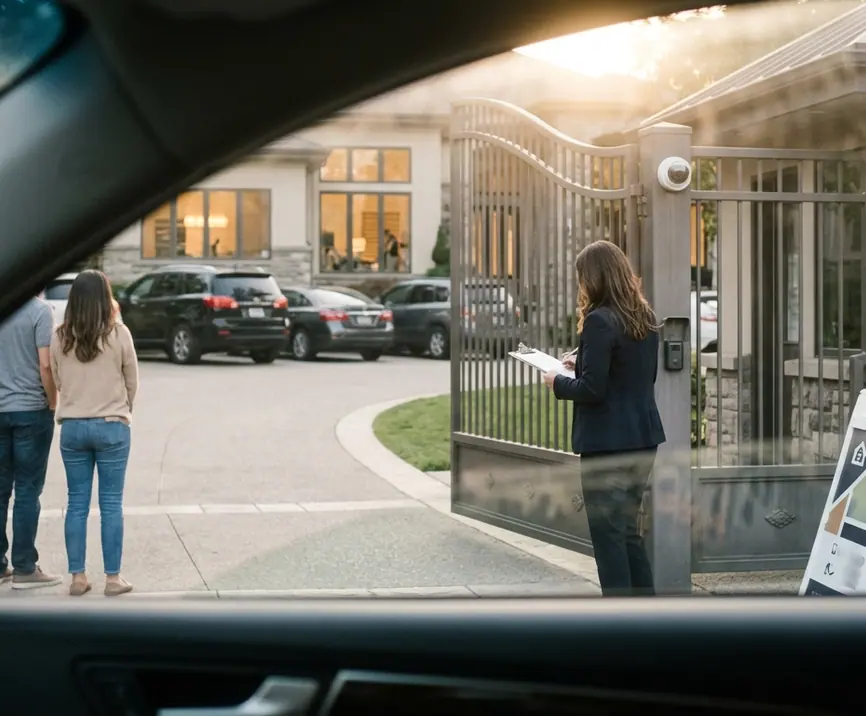
The new owner inherits these externalities even when the listing photographs disappear. Search results, old tour routes, and recognizable gates keep the address culturally visible.
Controlled Disclosure
The practical response is to separate public storytelling from buyer qualification. A campaign may release enough pedigree to activate international interest while reserving floor plans, access details, and sensitive interior relationships for vetted parties. In private or off-market networks, the ownership history can be communicated through a controlled dossier rather than broad repetition.
- Release exterior and historical material that establishes significance without exposing current security arrangements.
- Sequence viewings so staffing and gate procedures remain consistent throughout the campaign.
- Track unscheduled approaches as an operating cost rather than treating them as harmless publicity.
- Carry privacy requirements into negotiation, closing logistics, and post-sale property marketing archives.
Quiet Leverage
Pedigree retains negotiating power when access feels deliberate. Overexposure can turn exclusivity into spectacle and transfer a larger privacy burden to the purchaser.
Strategic Acquisition and Long-Term Resale Potential
Projecting One Ownership Cycle
Long-term assessment projects cultural relevance across a full ownership cycle while budgeting upgrades that preserve character rooms and exterior compositions. Resale readiness is reviewed against a seven- to 12-year hold assumption tied to the continuing recognizability of the prior owner’s body of work.
This is where market insights must move beyond current applause. The acquisition case should ask whether future buyers are likely to recognize the association, whether the estate still contains the spaces that make it tangible, and whether the local micro-market can support a distinct provenance layer at resale.
Preserve the Story, Renew the Systems
Infrastructure refresh windows are planned for roughly the first one to two years after closing. Mechanical systems and roofing can be replaced while original public-room volumes remain fixed. The sequencing protects the estate’s physical operation without stripping away the architectural evidence that supports its identity.
A preservation schedule should distinguish character-defining fabric from later work of limited narrative value. It should also record interventions carefully so a future buyer can understand what remains original, what was repaired, and what was introduced for contemporary living. That record strengthens the eventual property marketing narrative because it replaces vague claims of authenticity with a traceable chain of decisions.
The strategic buyer also prices stewardship into the acquisition. Security, specialist maintenance, restricted redesign options, and careful documentation belong in the ownership budget alongside conventional luxury amenities. A famous estate may offer cultural stature and exceptional architecture, yet it also imposes obligations that a newly developed comparable does not carry.
When acquiring a legendary estate, are you purchasing a home that serves your lifestyle, or are you paying a premium to serve as the caretaker of someone else’s legacy?