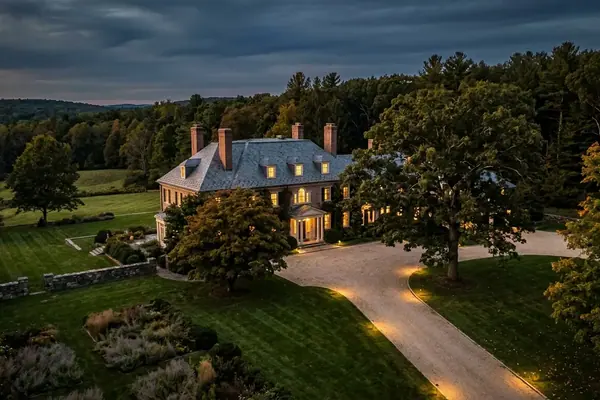
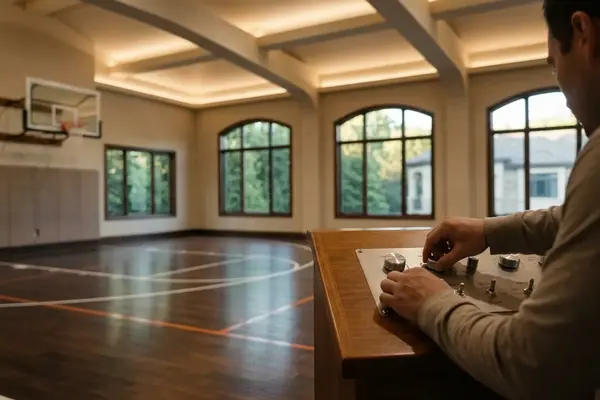
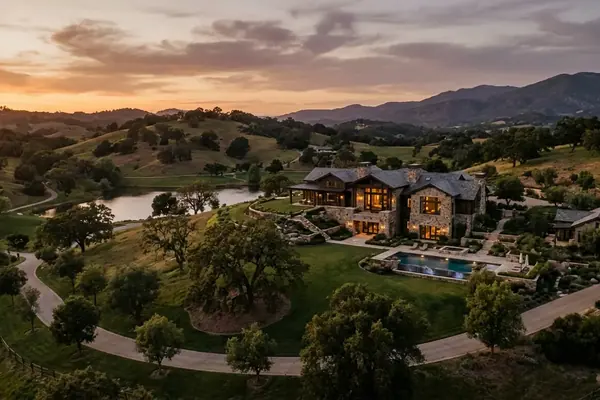
Ultra-luxury buyers rarely purchase square footage in isolation. They buy privacy, arrival, memory, social signal, and the quiet confidence that a property can hold a life larger than routine.
That is where standard listing media begins to underperform. A static gallery can describe marble, ceiling height, acreage, and frontage. It struggles to convey why a terrace feels ceremonial at dusk, why a library changes the temperature of a conversation, or why a long approach road turns privacy into theater.
Contents
- The Experiential Deficit: Why Standard Media Fails the Ultra-Luxury Market
- The Challenge: Market Stagnation and the Commoditization of Luxury
- Theoretical Framework: Narrative Transportation in Real Estate
- The Solution: Implementing Cinematic Production Methodologies
- Results: Qualitative Shifts in Buyer Engagement and Velocity
- Scope, Limitations, and Implementation Barriers
- Strategic Conclusions for Property Investors and Marketers
The Experiential Deficit: Why Standard Media Fails the Ultra-Luxury Market
The central provocation is simple: high-net-worth buyers do not merely acquire architecture; they acquire a curated lifestyle and a legacy narrative. The estate becomes a stage for identity, family continuity, access, and restraint.
From documentation to desire
The cognitive disconnect appears when a multi-million-dollar estate is marketed with the same static visual technique used for a median-priced home. The listing may be technically complete, but emotionally thin. A buyer sees rooms, not rhythm. They see finishes, not the way the property behaves during a dinner, a school holiday, a private weekend, or a late arrival after an international flight.
Standard tours fail to retain viewer attention much beyond a minute in remote buyer sessions. That matters because the first digital encounter often determines whether the buyer grants the property a deeper review or files it among other attractive but interchangeable assets.
The meaningful shift is not from poor photography to better photography. It is from descriptive documentation to narrative transportation. In the campaigns reviewed for this approach, the transition required roughly four to six weeks of pre-production before cameras moved. That period was not decorative. It was where the property’s story, buyer psychology, visual grammar, and sequence of emotional disclosure were built.
Summary: At the top of the market, the problem is rarely lack of imagery. The problem is lack of experiential consequence.
The Challenge: Market Stagnation and the Commoditization of Luxury
The market condition is uncomfortable for many luxury brokerages: legacy estates can remain on market three to four months longer than comparable renovated properties when the campaign fails to convey non-tangible value. The architecture may be significant. The grounds may be rare. The asking price may be defensible. Still, the buyer cannot feel the reason to act.
When prestige starts to look repetitive
International buyers often review dozens of structurally similar listings during a browsing session. After the tenth motor court, fifth infinity pool, and third double-height salon, even extraordinary homes begin to flatten. This is listing fatigue, and it is not solved by adding more drone footage.
Drone photography has value for scale, approach, and site orientation. Standard virtual walkthroughs help with spatial mapping. Both tools weaken when asked to carry atmosphere. They rarely capture the emotional resonance of a candlelit gallery, the acoustic hush of a private cinema, or the subtle choreography between staff circulation and owner privacy.
The strategic response is to stop treating the buyer as a passive browser. A theatrical tour gives the property sequence, pacing, and consequence. The expected outcome is not a larger pool of casual viewers; it is a smaller group of better-oriented buyers who understand why this estate is not interchangeable with the next one.
Note: Volume alone is a poor luxury metric. A campaign that attracts curiosity without qualification can slow the sales process rather than sharpen it.
Theoretical Framework: Narrative Transportation in Real Estate
The academic basis for this strategy sits close to narrative transportation theory, which examines how people become absorbed into a story and adjust attitudes through that immersion. In luxury real estate, the theory has particular force because the purchase is high-involvement, identity-laden, and emotionally expensive long before contracts are signed.